Note: Jerry Seinfeld’s a predatory creep and a Zio wanker. I have fond memories of Seinfeld hence this opening story, but the man himself is a washed up, anti-woke, genocide-supporting dinosaur, and was the least interesting character of his own show. With that disclaimer out of the way, do you remember “The Cafe” episode from Seinfeld? To summarize, Jerry eats at a brand new cafe across the street because he feels bad about its lack of customers. Jerry gets a big head about his supposed altruism every time he eats there and constantly thinks about his mother calling him a “great guy” or “special” for doing so. Spoiler alert for a show from the 90s! Jerry ends up bankrupting the restaurant when he convinces the owner to reinvent the place. I not only brought up that episode because it is funny, but also because it makes a great point about performative charity and validation seeking. Jerry’s initial reason for eating at the Dream Cafe may have been kind, but he was compelled to “help” after the fact because of an undeserved sense of superiority. This episode’s nearly 30 years old, but the message rings true today especially now that we’re in an age of vlogging, streams, and fair-weather allyship where anyone can be a saint if they use the right hashtags. I think we should talk about our service to others and when our generosity and/or solidarity becomes essentially meaningless.
I have several reasons for discussing this today. This post was largely inspired by my disdain for social media’s glamorization of charity with major offenders occupying TikTok or YouTube space, but I’m also deeply concerned of the hero complex that affects so many well-meaning leftists nowadays (me included). Our current state of being should be challenged at every opportunity and I am not here to disparage charitable acts per se. I am just saying that some YouTube vlogger handing out a buck on camera to an unhoused person does nothing. Our sincere yet flawed acts of charity are also equally worthless if they’re done to make ourselves feel better. You might as well just spit in the face of whoever you think you’re helping if your act is meant to soothe yourself or garner profit/fame. Victims of state violence and capitalism aren’t our free tickets to heaven.
I’ll be the first to admit that I’m a cynical son of o’ bitch and that helping others shouldn’t necessarily be frowned upon. However, I have always had a problem with social media personalities doing so for subscribers and ad revenue. Frankly, we should all take issue with that. For example, TikTok has been irritating me lately because my FYP will constantly recommend the “kindness influencer” videos which are on par with cop normalization content or corporate social justice pandering. They don’t solve the actual problem, make social ills seem like a simple one-two fix, and they do this while getting you (and the creator) something out of it. They are fast food for the eyes. Cheap and satisfying for the moment, but ultimately devoid of nutrients. You can use your platform for good by discussing the problems with economic inequality, the lack of affordable housing, restricted access to food, water and washrooms, racism, homophobia, transphobia, colonial violence, and the dire need for addiction and mental health resources. I appreciate, for example, when creators link to charities, actively raise funds themselves or even devote whole episodes/series to social issues hence why I give the viewer retention dollars to creators who do just that.
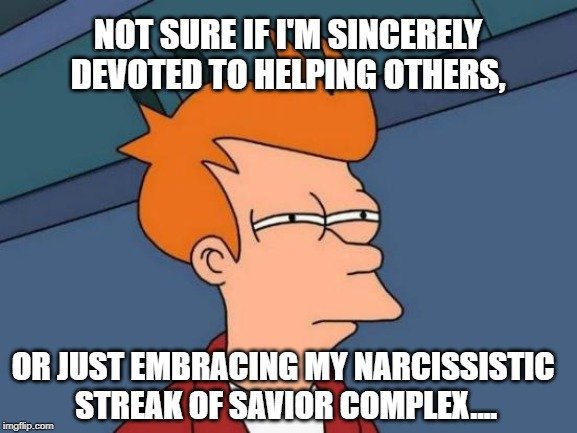
The hero/saviour complex is pervasive in leftist circles and it’s understandable at first. Most of us got into revolutionary politics because we saw through the bullshit. We witnessed suffering, inequity, greed and destruction and didn’t look away. We made the choice to raise awareness and help others instead of simply accepting their lot and ours. We want positive change. That should be seen as admirable, but our deeper intentions and desires should also be examined routinely and criticized as needed. Why are we doing this exactly? Is it white guilt? Is it to repair trauma? Is it out of our pure and untethered devotion to human liberation? Your reasons matter because they will inevitably affect the quality of your actions. I have been guilty in the past of using my activism to bandage my own wounds or alleviate my guilt instead of truly investing myself in the goals and problems of my brothers, sisters, and non-binary comrades. I have wanted to save everyone instead of focusing on what I can realistically do right now. You may have entered the leftist sphere due to past trauma or realization of your privilege (I know I did), but if you don’t evolve as you pursue justice, you are continuing down a selfish path whether you consciously acknowledge it or not. Please don’t take my use of the term “selfishness” to imply that we are or were bad people. Selfishness can emerge from a place of love or healing initially, but our continuation and embrace of it is the problem. If your charity or activism is primarily an act of self-soothing, you are doing a great disservice to those you claim solidarity with. It’s important to change your thinking as you grow lest you become more of a liability than an accomplice. It can be hard to acknowledge selfishness or even know when our goals cross that thin line which is why constant self-evaluation and critical judgment is key. You might be doing good work, but are you doing it for a good reason?
I apologize if this seemed like an overly negative post. Some might argue that helping is helping regardless of the intent. I don’t feel that way. Good deeds aren’t currency and shouldn’t be exchanged for the self. Your reasons to fight for social justice do matter and make the difference between lasting change and temporary fixes. Kindness for clout or fame is not kind. Compassion for others in order to repair yourself or hide guilt is not compassionate. I believe that serving others should feel good because solidarity and empathy make us human. Mere pride is not the problem here, but rather it’s the expectation of getting more than we deserve out of our charity or interactions. Give because you care and with no regard to reputation or viewership. Our love shouldn’t be paired with expectations or demands. I feel as though a lot of fair-weather allies, newcomers, and even hardened leftists could benefit from that simple lesson. To close this piece, I’d like to say that it’s vital for all of us to continue asking ourselves “Who are we giving to?” “Who are we fighting for?” “Why are we here at this protest, vigil, rally etc?” and slowly but surely grow our mindset. We need to see the reality and the people beyond the blinders of our own self-actualization. Thanks for reading and I hope to see you again. Solidarity, my friends.


 Missives and Molotovs